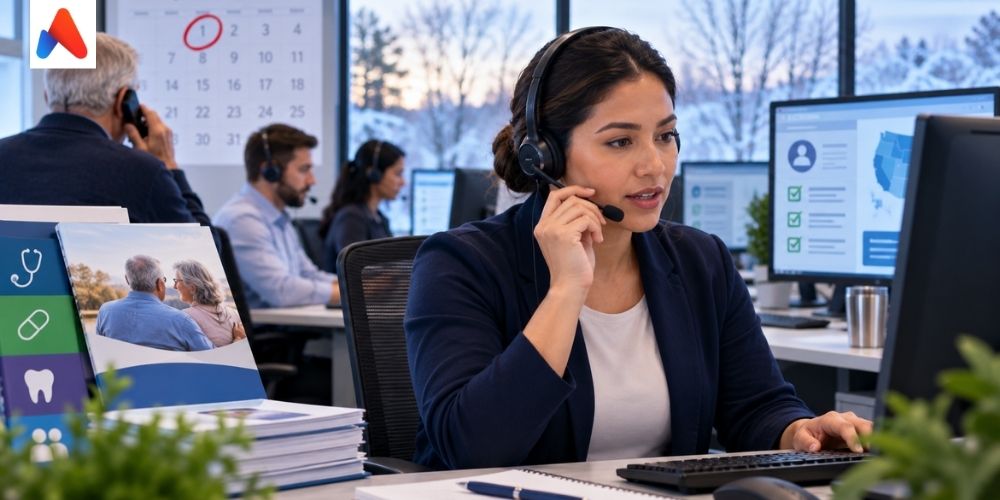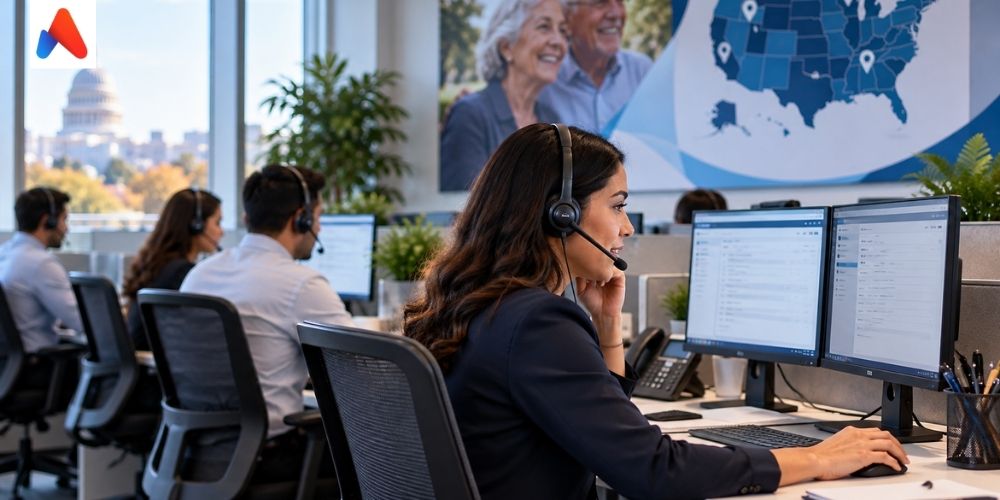





A patient calls a federally qualified health center at 8:03 a.m. The line rings twelve times. Nobody picks up. She hangs up, skips the appointment, and her blood pressure medication runs out three weeks later. That single missed call is not a fluke. It is a symptom of a staffing crisis spreading across community health centers nationwide. More than 70 percent of FQHCs now report critical staffing shortages, according to a Commonwealth Fund survey covering nearly 740 health center leaders (Nonprofit Quarterly). Consequently, front-desk teams are stretched thin, phone queues are longer, and patients are quietly falling through the cracks. This is not just an HR problem. It is an access problem, and it deserves a real playbook.
Why Community Health Center Patient Access Support Is Buckling Under Staffing Strain
Health centers were built on a mission that larger systems rarely embrace: care regardless of ability to pay. That mission, however, runs on razor-thin margins. Health center net margins fell from 1.6 percent in 2023 to negative 2.1 percent in 2024, according to KFF data cited by American Health Connection (AHC). Meanwhile, nearly half of health center leaders say they are short on nurse practitioners and physician assistants. Front-office and call-handling roles face the same crunch, yet they rarely get headlines. As a result, community health center patient access support becomes an afterthought exactly when it matters most. Joseph Betancourt, president of the Commonwealth Fund, put it plainly: centers operate under enormous pressure from underfunding and workforce shortages. That pressure trickles straight down to the phone line, the scheduling desk, and the patient who simply wants an appointment.
The Real Cost of Understaffed Front Desks and Overflowing Phone Lines
Every unanswered call carries a price tag most administrators never see on a spreadsheet. A missed call today often becomes a missed screening tomorrow, and a missed screening eventually becomes an emergency room visit. Health centers already struggle to refer patients to specialists in a timely manner, with 41 percent reporting delays, a number that climbs to 73 percent for uninsured or Medicaid patients (Fierce Healthcare). Front-line staff, already juggling walk-ins and paperwork, simply cannot absorb more call volume without breaking something. Burnout climbs, turnover follows, and the cycle repeats itself. Ironically, the centers designed to close health disparities end up widening them whenever the phone goes unanswered. Someone has to break this loop, and it usually is not another internal hire, because qualified candidates are already being recruited away by hospitals offering higher pay.
How FQHC Call Center Outsourcing Closes the Access Gap
This is where fqhc call center outsourcing earns its place in the conversation, not as a buzzword but as a practical fix. Instead of stretching two front-desk employees across five clinic sites, outsourced teams handle scheduling, reminders, insurance questions, and after-hours triage at scale. AHC reports that centralized scheduling and outreach models can lower patient access costs by 20 percent or more while improving call-related satisfaction by 75 percent (AHC). Furthermore, outsourcing typically costs 20 to 40 percent less than running an equivalent in-house team once benefits, turnover, and technology are factored in. Think of it like calling in reinforcements during a snowstorm instead of asking three tired shovelers to clear the whole parking lot alone. The clinic staff stay focused on medicine. The outsourced team handles the ringing phone. Everybody, including the patient, wins.
Talkdesk’s healthcare outsourcing research adds a useful reminder here: patients waiting on hold are patients losing confidence in their provider, one minute at a time. Outsourced healthcare call centers give organizations access to trained agents who understand HIPAA, medical terminology, and empathetic de-escalation (Talkdesk). That combination is difficult to replicate quickly with a stretched internal team, especially one already fighting turnover.
Real-World Proof: Two Community Health Centers That Adapted
A rural West Virginia FQHC offers a compelling example. Facing chronic staffing gaps, the center deployed telehealth and remote monitoring tools in 2020, allowing providers to see patients from home while easing burnout among remaining staff. The lesson travels well beyond telehealth: creative staffing models, including outsourced patient communication, can amplify a small workforce without sacrificing care quality.
California tells a similar story from the funding side. Senate Bill 525 pushed healthcare worker minimum wages toward twenty-five dollars per hour by 2026, a welcome move for staff but a serious strain on fixed FQHC budgets. Centers there are now leaning harder on external partners for scheduling and revenue cycle work simply to keep the math balanced. Both examples point toward the same conclusion. Community health centers that pair internal clinical staff with outsourced administrative support tend to weather workforce shortages better than those trying to do everything in-house.
- Long phone queues
- Front desk overload
- High turnover
- Missed appointments
- Limited after-hours support
- Dedicated scheduling team
- Faster patient response
- Lower staff burnout
- Better appointment completion
- Improved patient satisfaction
Building a Staffing Playbook That Actually Works
A real staffing playbook starts with an honest audit of where patient access actually breaks down. Are calls abandoned before 8 a.m.? Do reminder calls go out consistently? Is after-hours triage nonexistent? Once leadership identifies the gap, the next step is deciding which functions genuinely need an on-site presence and which ones travel well to a specialized partner. Appointment scheduling, insurance verification, reminder calls, and after-hours support are prime candidates for outsourcing because they demand consistency more than clinical judgment. Meanwhile, clinical triage and care coordination should stay closely tied to the care team. This division of labor, rather than a wholesale outsourcing of everything, tends to produce the strongest results for both patients and staff morale.
Health centers that build this hybrid model report faster response times, fewer abandoned calls, and measurably better patient satisfaction scores, according to industry data across outsourced healthcare contact centers. None of this requires abandoning the community-first mission that defines FQHCs. Instead, it requires accepting that mission-driven care and operational efficiency are not opposing forces. They can, and should, work together.
Partner With Ameridial for Reliable Patient Access Support
The staffing crisis at community health centers will not solve itself, and waiting rarely helps anyone, especially the patient stuck on hold. Ameridial specializes in fqhc call center outsourcing built specifically around the realities of underserved populations, HIPAA compliance, and lean nonprofit budgets. Our teams handle scheduling, reminders, and patient outreach so your clinical staff can focus entirely on care. If your health center is ready to strengthen community health center patient access support without stretching an already exhausted team, reach out to Ameridial today for a consultation tailored to your patient volume and mission.