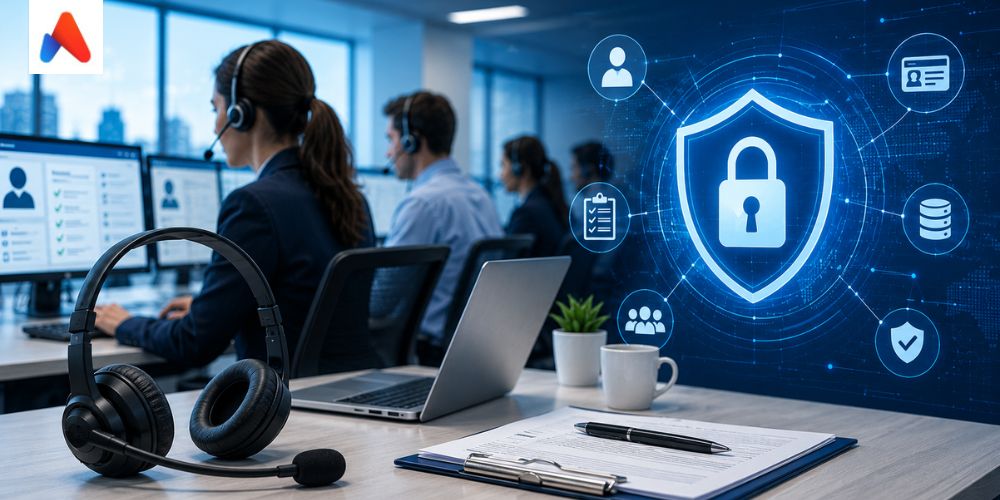





Urgent care used to feel like the calm alternative to a crowded emergency room. Today, that waiting room has simply moved to the phone line. The U.S. urgent care market is projected to reach $75 billion by 2033 (Grand View Research). That growth reflects a 9.8% CAGR, driven largely by patients skipping primary care entirely. Meanwhile, center counts have nearly doubled in a single decade. They climbed from roughly 7,220 sites in 2014 to over 14,000 today. That expansion looks impressive on a boardroom slide deck. On the ground, however, it means more ringing phones and longer hold queues. Front-desk teams now stretch far past their original job description. This is exactly where urgent care call center outsourcing steps in. So do urgent care scheduling support services, once considered a nice-to-have upgrade. Both have quietly become survival tools instead.
A Growth Curve Nobody Actually Staffed For
Clinic openings tend to outpace hiring plans, and the gap shows up first at the front desk. Jeff Waddill of AMN Healthcare describes the sector’s appeal simply: “It still comes down to convenience” (AMN Healthcare). Patients choose urgent care because it promises speed above almost everything else. However, that speed only exists if someone answers the phone. Otherwise, the patient simply gives up and drives to the emergency room instead. Every unanswered call quietly undermines the exact convenience that built this industry.
When the Phone Rings Faster Than Anyone Can Answer
Across medical practices broadly, roughly 23% of incoming calls go unanswered entirely (AgentZap). Smaller urgent care sites often see even higher miss rates, sometimes exceeding 30%. That number should worry any operator watching patient volume closely. After all, 85% of patients will not call back after one unanswered attempt (Keona Health). They simply try a competing clinic down the street instead. One widely cited benchmark claims “an abandonment rate between 5-8% is no cause for concern” (healow Genie). Yet plenty of urgent care front desks blow past that number during flu season. Nobody notices until the revenue reports arrive. Consequently, clinics lose walk-in visits they never even knew they missed.
The Urgent Care Patient Leakage Funnel
How front-desk capacity constraints silently drain your patient volume.
Why Urgent Care Call Center Outsourcing Solves the Capacity Gap
Front-desk staff already juggle check-ins, insurance verification, and anxious walk-ins standing nearby. Asking that same person to also field ringing phones is simply unrealistic. This is precisely the operational strain that urgent care call center outsourcing was built to relieve. A dedicated outsourced team absorbs sudden call volume spikes with ease. As a result, in-house staff can focus fully on the patient standing in front of them. Clinics therefore rarely lose walk-ins to a distracted receptionist anymore. Outsourced healthcare call centers also train agents specifically in medical scheduling and HIPAA-compliant communication (CCD Care). Therefore, the clinic gains real coverage without adding a single payroll line.
Urgent Care Scheduling Support Services: The Quiet Fix Behind the Curtain
Scheduling sounds simple until dozens of same-day requests collide with provider capacity at once. Urgent care scheduling support services exist to untangle exactly that daily chaos. A specialized scheduling partner triages calls by urgency and books appointments across locations. Automated reminders also cut no-show rates significantly across the entire patient panel. In fact, appointment reminders alone reduce no-shows by roughly 29% (CCD Care). Meanwhile, scheduling support extends coverage into evenings, when demand actually surges. Around 41% of patient calls occur outside standard business hours entirely (AgentZap). Clinics that once closed phone lines at 5 p.m. no longer lose that evening rush.
Two Clinics, Two Real Proof Points
Real-world data backs this up, rather than just theory alone. One urgent care operation implemented online scheduling and reduced first-hour room-wait numbers by 35% (Journal of Urgent Care Medicine). Wait-to-be-seen numbers dropped by 33% at that same facility. Separately, a European outpatient practice adopted structured online appointment scheduling for its patients. Its unused-appointment rate fell from 22.7% down to 10.3% (Frontiers in Digital Health). Neither clinic hired additional front-desk staff to reach those numbers. Instead, both restructured how incoming demand reached their schedule in the first place. That restructuring is precisely what scheduling support services deliver at scale.
The Impact of Structured Scheduling Support
What Patients Actually Feel While On Hold
Numbers rarely capture frustration, yet frustration is exactly what drives patients away. Longer phone wait times reduced patients’ sense that care felt truly accessible (PMC). This held true even when the actual appointment still arrived on time. Patients who experience a poor phone interaction are four times more likely to switch providers entirely (Dialog Health). Nobody enjoys hold music, and honestly, nobody remembers it fondly either. They simply remember hanging up and calling somewhere else instead. That single moment of silence can undo months of marketing spend in ninety seconds flat.
Building a Front Desk That Actually Scales
Urgent care will keep expanding into suburbs, rural corridors, and hybrid ER models throughout 2026 (Urgent Care Association). Consequently, the operators who win will not simply be the ones opening the most locations. Instead, they will be the ones whose phones get answered on the first ring. Pairing urgent care call center outsourcing with structured urgent care scheduling support services changes everything. It turns an overwhelmed front desk into a scalable growth engine, rather than a daily fire drill. Clinics that make this shift stop losing patients to a busy signal. They start converting every single inquiry into a booked, kept appointment.
Ready to Stop Losing Patients to Hold Music?
Ameridial builds HIPAA-compliant, healthcare-specific contact center teams that answer every call like your best hire would.
✓ 100% HIPAA Compliant
✓ Scaled for Flu Surges