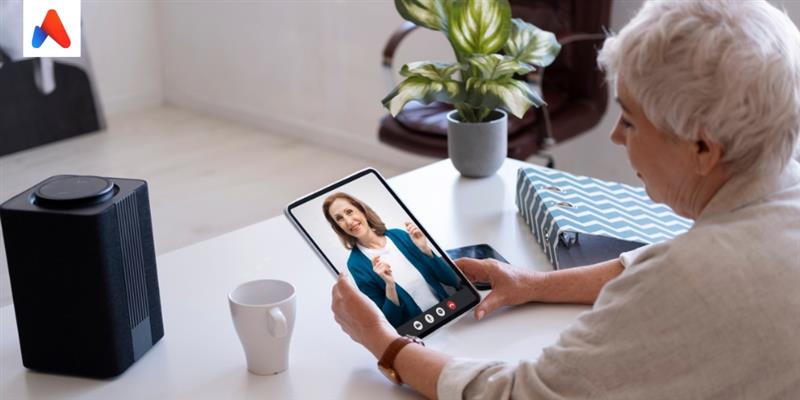





Every clinic has one patient who never leaves, never pays, and never stops demanding attention. That patient is the EHR. A landmark Annals of Internal Medicine time-and-motion study tracked 57 physicians across four specialties. It found nearly two hours of EHR and desk work for every hour of patient face time.
per Face-Time Hour
Every Night
on EHR & Desk Work
Worse, physicians reported another one to two hours of charting at home each night. Dr. Susan Hingle captured the cost in an accompanying editorial. She wrote that EHRs “draw attention away from their direct interactions with patients.” That gap explains why demand for medical scribing companies keeps climbing.
However, the market now looks crowded, noisy, and suspiciously identical from the outside. Every proposal promises accuracy, compliance, and seamless integration, often in the same tired font. In nearly four decades of running outsourced healthcare programs, we have learned which answers actually predict success. So we built the checklist we wish every buyer carried into a vendor call.
Compliance Questions to Ask Medical Scribe Agencies Before You Sign
1. Will you sign a BAA before any scribe touches PHI?
Start here, because every other answer depends on this one. Any vendor offering HIPAA-compliant medical scribing services must sign a Business Associate Agreement before onboarding. Furthermore, ask whether that BAA covers subcontractors, offshore staff, and any AI tools in the workflow. A vendor that hesitates here resembles a surgeon who “doesn’t really believe in” handwashing.
2. Which independent audits back your security claims?
HIPAA carries no official government certification, so a shiny badge on a website proves very little. Instead, request current SOC 2 Type II and ISO 27001 reports, then read their scope statements. Check that the audited environment actually includes the scribing operation. Ameridial, for instance, lists its security and compliance certifications so buyers can verify them directly.
3. Where do your scribes work, and how do you control access?
Remote and virtual scribing changes the threat surface considerably. Therefore, ask about locked-down workstations, VPN controls, and role-based EHR permissions. Also ask how quickly the vendor revokes access when a scribe leaves. The right answer sounds like “same day,” not “eventually.”
Scribe Quality and Training: Vetting a Medical Scribing Service Provider
4. How do you recruit, train, and test your scribes?
Scribing demands medical terminology, clinical logic, and fast typing under real pressure. So ask about training hours, certification pathways, and how scribes prove competency before going live. Request de-identified sample notes from your own specialty, not a polished showcase chart. Confident scribing companies hand those samples over without a long negotiation.
5. Do your scribes actually know my specialty?
An orthopedic note looks nothing like a behavioral health note. Consequently, a scribe trained only in primary care may stumble in cardiology or the emergency department. Ask how the vendor matches scribes to specialty templates and each physician’s documentation style. Our breakdown of live, virtual, and hybrid medical scribing models shows how care setting shapes this decision.
6. What is your turnover rate, and who covers absences?
Turnover quietly erodes value, because every new scribe restarts the learning curve. Many scribes are pre-med students heading to school, so attrition can run high. Therefore, ask for annual turnover figures and the written backup plan for sick days. No physician should discover a staffing gap at 8:02 on a Monday morning.
EHR Integration and AI Questions for Scribing Companies
7. Which EHRs do your scribes use every day?
Epic, Oracle Health (Cerner), and athenahealth each carry their own quirks and shortcuts. Ask how many active scribes currently document inside your exact EHR environment. Additionally, confirm who handles login provisioning, templates, and smart phrases during onboarding. Vague answers here usually mean your physicians will become unpaid trainers.
8. How do you use AI, and who reviews its output?
Ambient AI tools promise speed, yet they can still invent a medication or misattribute a speaker. Ask whether a trained human reviews every AI draft before it reaches the chart. Moreover, confirm in writing whether your patient data trains the vendor’s models. We unpack these trade-offs in our post on the hybrid AI-plus-human medical scribing model.
9. What is your average note turnaround time?
Notes that close late delay coding, billing, and care coordination downstream. So ask for average completion time and the share of notes closed the same day. Then ask how often the vendor reports these numbers, and to whom. If the honest answer starts with “it depends,” keep your pen capped.
Pricing, Scalability and Proof: Comparing Medical Scribing Companies
10. How do you price, and what sits outside the quote?
Most vendors price per provider, per hour, or per encounter. Each model works, but hidden fees for onboarding, EHR training, or overtime can sting later. Ask for a fully loaded monthly estimate built on your real clinic schedule. Also clarify notice periods, and confirm that you own every note and recording at exit.
11. Can you scale up or down without starting over?
Practices add providers, open new sites, and lose physicians to retirement. Therefore, your partner should flex coverage without fresh contracts or months of recruiting. Ask how many days it takes to staff a new provider, then call references who scaled. Strong medical scribing companies answer with a specific number, not a shrug.
12. Will you prove impact with a measured pilot?
Proof beats promises every single time. Ask for a pilot with baseline metrics for after-hours charting, note closure, and physician satisfaction. Then compare those results against published evidence. Stanford researchers, led by Steven Lin, MD, ran the first randomized controlled trial of medical scribes. They wrote that “spending less time on documentation frees up the physician to pursue direct clinical care.”
Real-World Example: What Kaiser Permanente Learned
Kaiser Permanente Northern California offers a useful benchmark for any pilot. Researchers ran a 12-month crossover study with 18 primary care physicians, alternating scribe support every three months. With scribes, 94% of physicians reported greater job satisfaction, and 89% reported better patient interactions. Meanwhile, their odds of closing notes by the next business day nearly tripled.
The Debate Worth Having: Human, AI, or Hybrid Scribing?
Here is where we expect some healthy pushback. Some leaders argue that ambient AI will soon make human scribes obsolete. Others insist that clinical nuance still needs a trained human ear and judgment. We sit firmly in the middle, and our case for human-powered medical scribing explains exactly why.
So where does your organization land on this question? Share your view with peers in the comments, because this debate deserves more honest data. Meanwhile, keep these 12 questions handy for your next vendor call. Notice which vendors welcome them and which ones suddenly need to “circle back.”
+ ISO 27001
+ sample notes
your exact system
reviewed by trained staff
+ clear success criteria
Ready to Put Ameridial Through the 12-Question Test?
We expect buyers to ask us every question on this list, and we enjoy answering them. Ameridial has supported U.S. healthcare organizations since 1987, backed by SOC 2 Type II and ISO 27001:2022 certifications. Our HIPAA-compliant medical scribing services cover live, virtual, remote, and ER scribing across major EHRs. Most practices go live within five to seven business days.
Your physicians did not attend medical school to become expensive typists. Book a free consultation with Ameridial and bring your toughest vendor questions. We will answer each one, then prove it with a measured pilot.