



The Hidden Revenue Leak
Patient demand wasn’t the problem. Operational capacity was.
Every delayed diagnostic test represents more than a scheduling issue—it represents delayed revenue, increased operational pressure, and a poorer patient experience.
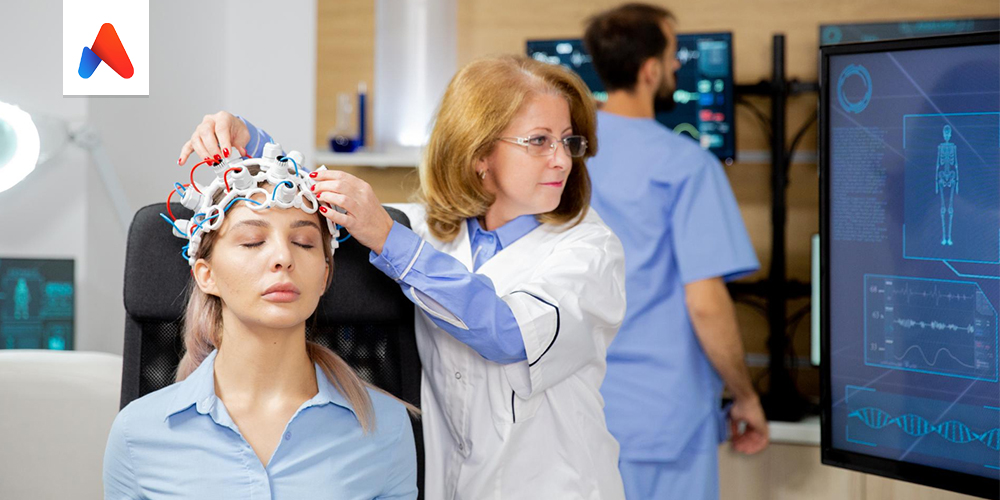
One of the nation’s leading providers of at-home Video Electroencephalogram (VEEG) testing experienced exactly this challenge. As patient demand accelerated, operational complexity increased even faster. Growing interaction volumes, technician onboarding, quality oversight, and repeatable support activities placed increasing strain on internal teams.
The organization wasn’t struggling to attract patients.
It was struggling to keep operations moving efficiently enough to serve them.
Leadership recognized that simply hiring more people would increase cost without solving the underlying operational issues. They needed a scalable support model capable of improving execution, maintaining quality, and supporting continued growth without placing additional burden on clinical resources.
The Business Challenge
The provider faced multiple operational pressures that were beginning to affect both efficiency and financial performance.
Without operational improvements, every increase in patient demand created additional pressure on existing teams instead of increasing organizational performance.
Building an Operational Growth Engine
Rather than supplying additional labor, Ameridial implemented a structured healthcare operations support model designed to improve execution across the entire workflow.
Workforce Readiness
Qualified technicians were recruited, trained, and certified through a structured onboarding program that reduced ramp-up time while maintaining operational consistency.
Standardized Operations
Repeatable workflows and documented operating procedures reduced process variation, creating greater consistency across day-to-day operations.
Quality Governance
A centralized quality scorecard established measurable performance standards, allowing leadership to monitor quality while continuously improving execution.
Continuous Optimization
Operational workflows were reviewed and refined to improve efficiency, strengthen compliance, and support long-term scalability without disrupting existing operations.
From Operational Pressure to Operational Performance
- The impact became visible within weeks.
- New technicians reached productivity faster.
- Quality improved across operational activities.
- Errors declined significantly.
Internal teams spent less time correcting operational issues and more time focusing on higher-value responsibilities.
Instead of reacting to growing demand, the provider established an operating model capable of supporting sustainable growth.
Measurable Business Results
The operational improvements translated directly into measurable business performance.
These results demonstrate that operational excellence is not simply an efficiency initiative—it is a revenue strategy. By improving workforce readiness, quality management, and workflow consistency, the provider converted existing patient demand into measurable financial growth.
Before vs. After
Executive Takeaways
Revenue Growth Starts With Operational Readiness
Healthcare organizations often focus on increasing patient demand, but sustainable growth depends on the ability to consistently deliver services without creating operational bottlenecks.
Standardization Outperforms Reactive Hiring
Scaling teams without standardized processes often increases complexity. Structured workflows, quality governance, and workforce readiness create a stronger foundation for long-term growth.
Quality Protects Financial Performance
Reducing operational variation improves accuracy, accelerates execution, and minimizes the hidden costs associated with rework, delays, and inconsistent service delivery.
Healthcare BPO Should Drive Business Outcomes
The right operational partner should do more than answer calls. It should strengthen execution, improve quality, increase productivity, and create measurable financial impact.
Could Your Operations Be Limiting Revenue?
Many healthcare organizations believe they have a staffing problem when they actually have an operational design problem.
If growing patient demand is creating workflow bottlenecks, slower onboarding, inconsistent quality, or increasing administrative pressure, it may be time to rethink how operations are supported.
Download the complete case study to learn how Ameridial helped a leading U.S. EEG provider build a scalable healthcare operations model that generated more than $1 million in additional monthly revenue, improved productivity by 15%, achieved a 98% quality score, and reduced operational errors by 58%—all within the first phase of implementation.