





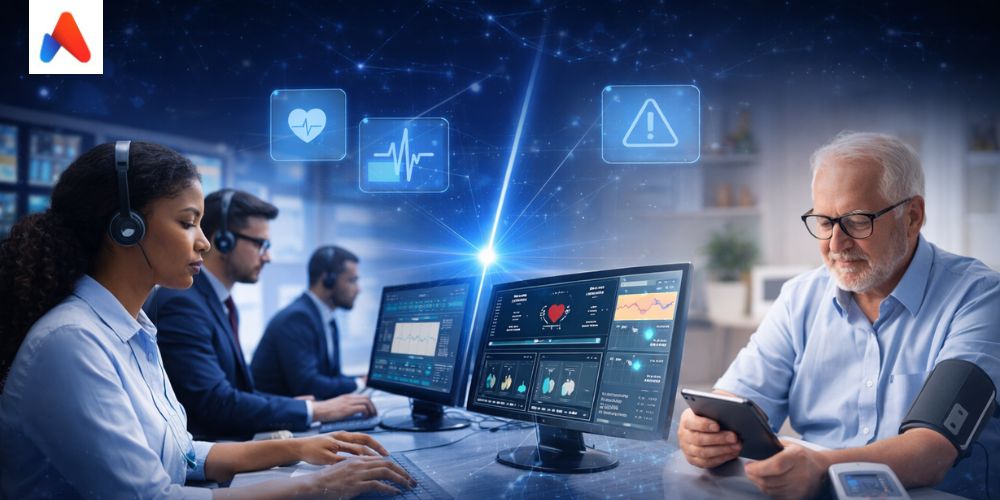
Remote care has moved beyond pilot programs and entered mainstream healthcare delivery. However, many organizations struggle to operationalize Remote Patient Monitoring Operations at scale. While devices capture patient data efficiently, the real challenge lies in managing that data in real time.
Healthcare providers increasingly adopt RPM Clinical Monitoring Services to track chronic conditions and reduce hospital readmissions. Yet, without structured workflows and continuous oversight, these programs fail to deliver consistent outcomes. Technology collects the data, but people and processes determine its value.
A growing concern across health systems is Reducing RPM Alert Fatigue, which directly impacts clinical efficiency and patient safety. When clinicians receive excessive or irrelevant alerts, response quality declines. Therefore, organizations must rethink how monitoring systems are managed and supported.
Understanding How Remote Patient Monitoring Operations Function in Practice
Remote patient monitoring appears simple on the surface. Devices collect vital signs and transmit data to healthcare systems. However, the operational reality involves multiple layers of coordination, validation, and response.
Data Collection, Transmission, and Interpretation
Patients use connected devices to measure metrics such as blood pressure, glucose levels, and heart rate. These readings are transmitted to centralized platforms where they are analyzed.
However, raw data alone does not create value. Clinical teams must interpret these readings within the context of patient history. This process requires structured Remote Patient Monitoring Operations that ensure data accuracy and timely review.
According to a study published in the Journal of Medical Internet Research, RPM programs reduced hospitalizations by up to 38%. Yet, the study emphasized the importance of continuous monitoring and intervention.
The Hidden Complexity Behind RPM Workflows
Behind every successful RPM program lies a network of support teams managing alerts, escalations, and patient communication. These workflows ensure that critical signals receive immediate attention.
Dr. Robert Wachter once noted, “Digital health is not about gadgets; it is about systems.” This statement highlights the operational depth required to make RPM effective.
Without structured processes, data overload becomes inevitable. Consequently, clinicians face increased pressure, which impacts decision-making and care quality.
Why RPM Clinical Monitoring Services Require Continuous Support
Scaling RPM programs demands consistency and responsiveness. Healthcare organizations cannot rely solely on internal teams to manage continuous monitoring. This is where RPM Clinical Monitoring Services supported by specialized teams become essential.
Ensuring Real-Time Response and Patient Engagement
Patients expect timely feedback when their health data indicates potential issues. Delayed responses reduce trust and increase risk. Continuous monitoring ensures that alerts are addressed promptly.
Moreover, proactive communication improves patient adherence to treatment plans. When patients feel supported, they are more likely to stay engaged with their care programs.
Reducing Clinical Burden Through Operational Support
Clinicians often face overwhelming workloads. Managing RPM alerts adds another layer of responsibility. Dedicated support teams handle initial triage, allowing clinicians to focus on critical cases.
A Deloitte report indicates that healthcare organizations using outsourced monitoring support improved operational efficiency and reduced burnout. These outcomes demonstrate the value of structured support models.
Real-World Example of RPM Success
Large health systems implementing centralized monitoring hubs reported improved patient outcomes and reduced emergency visits. These programs relied on coordinated teams that managed alerts and patient communication effectively.
Interestingly, one healthcare executive joked, “Our devices worked perfectly; our processes did not.” This observation reflects a common industry challenge.
Reducing RPM Alert Fatigue Through Intelligent Support Models
Alert fatigue remains one of the biggest barriers to RPM success. Excessive notifications overwhelm clinicians and reduce response effectiveness. Therefore, Reducing RPM Alert Fatigue must become a strategic priority.
Prioritization and Smart Alert Management
Advanced monitoring systems categorize alerts based on severity. Support teams review these alerts and escalate only critical cases. This approach reduces noise and improves clinical focus.
Additionally, standardized protocols ensure consistent decision-making across teams. These protocols enhance both efficiency and accuracy.
Integrating Technology with Human Oversight
Automation plays a key role in filtering and analyzing data. However, human judgment remains essential for contextual interpretation. Combining technology with skilled support teams creates a balanced model.
Continuous Improvement Through Data Insights
Organizations must analyze alert patterns to identify inefficiencies. Data-driven insights help refine thresholds and improve system performance. This process ensures that monitoring systems evolve with patient needs.
The Strategic Role of 24/7 BPO Support in RPM Programs
Remote patient monitoring operates continuously, not just during business hours. Therefore, 24/7 support becomes essential for maintaining care quality and responsiveness.
24/7 Support for Continuous Monitoring
Round-the-clock support ensures that patient data is reviewed and acted upon at all times. This capability reduces delays and improves patient outcomes.
Scalability and Operational Flexibility
BPO support models allow healthcare organizations to scale monitoring programs without increasing internal workload. These models adapt to changing patient volumes and operational demands.
Enhancing Patient Experience and Trust
Consistent communication and timely interventions build patient confidence. Patients feel reassured when they know their health data is actively monitored.
An Accenture report highlights that patient experience directly influences provider loyalty. Effective RPM programs strengthen this relationship.
Building a Sustainable RPM Ecosystem
Healthcare organizations must adopt a holistic approach to RPM. This approach integrates Remote Patient Monitoring Operations, RPM Clinical Monitoring Services, and strategies for Reducing RPM Alert Fatigue into a unified framework.
Aligning Technology, People, and Processes
Successful RPM programs balance advanced technology with skilled support teams. This alignment ensures that data translates into actionable insights.
Leveraging Analytics for Continuous Optimization
Data analytics provides visibility into system performance and patient outcomes. Organizations can use these insights to refine workflows and improve efficiency.
Creating a Patient-Centric Monitoring Model
A sustainable RPM ecosystem prioritizes patient needs and engagement. This focus ensures long-term success and improved health outcomes.
Remote patient monitoring holds immense potential to transform healthcare delivery. However, its success depends on more than connected devices. Organizations must build strong operational frameworks supported by continuous monitoring and intelligent workflows.
By investing in Remote Patient Monitoring Operations, strengthening RPM Clinical Monitoring Services, and actively Reducing RPM Alert Fatigue, healthcare providers can unlock the full value of RPM programs. The addition of 24/7 BPO support ensures that these systems remain responsive, scalable, and patient-centric.
Healthcare leaders who understand this balance will move beyond experimentation and achieve sustainable growth in remote care. Those who ignore it will continue to face operational challenges that limit the true impact of their RPM investments.
If your organization aims to scale RPM programs with confidence, the right support infrastructure will determine long-term success.
Explore Ameridial Remote Patient Monitoring Support