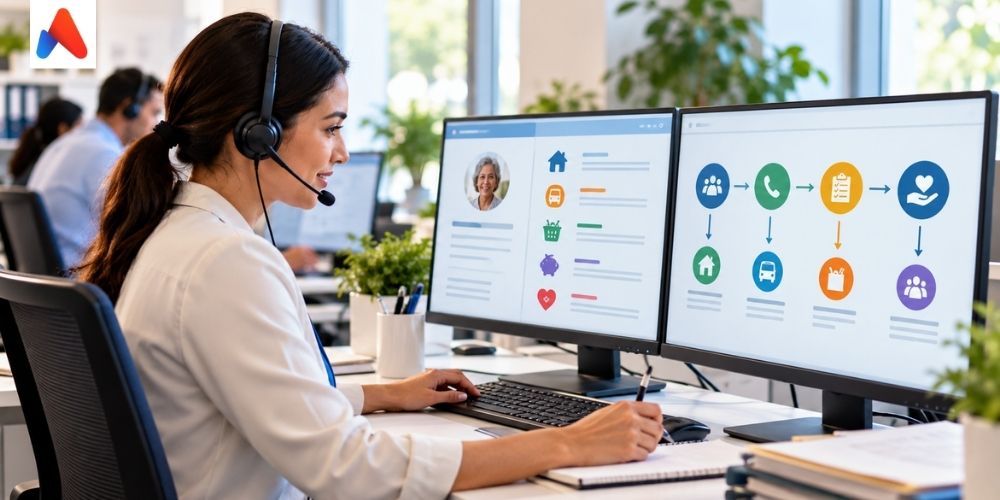




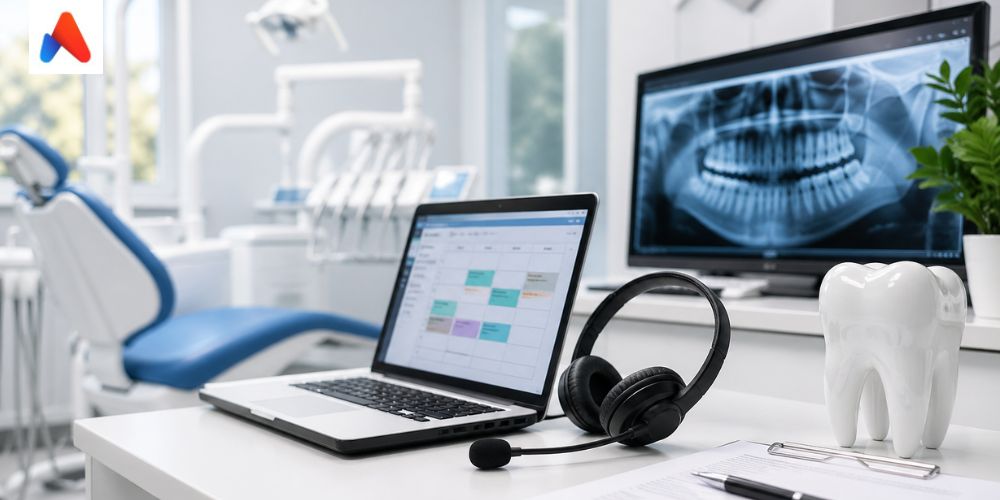
The pressure on modern dental practice support systems is no longer operational; it is strategic. As patient expectations evolve and margins tighten, Dental Practices are rethinking how care delivery connects with administrative execution. In this context, dental service organization BPO models are emerging as a practical response to complexity, especially across scheduling, billing, and patient engagement.
At the same time, the US dental services organization market continues to expand, driven by consolidation and private equity interest. However, growth has exposed inefficiencies in dental provider data management, fragmented billing cycles, and inconsistent patient communication. Therefore, leaders are increasingly turning to solutions that can outsource medical scheduling while improving experience and financial outcomes simultaneously.
Consequently, Dental Service Organizations (DSOs) are no longer asking whether to outsource. Instead, they are asking how to implement dental practice support that integrates seamlessly with clinical workflows. This shift signals a deeper transformation where outsourcing is not cost-driven alone but performance-driven.
The Operational Reality: Why Dental Practice Support Is Breaking Down
Across the industry, front-desk bottlenecks remain one of the most underestimated risks. Missed calls, delayed confirmations, and rescheduling errors directly impact revenue leakage. According to the American Dental Association, nearly 30% of patient calls go unanswered during peak hours.
However, the issue extends beyond access. Poor dental provider data management leads to claim rejections, while disconnected systems delay reimbursement cycles. As a result, practices face rising administrative overheads without proportional growth in patient volume.
Operational inefficiencies, not clinical capacity, are the primary constraint in dental growth today.
Where Traditional Models Fail
Legacy staffing models struggle to handle fluctuating patient demand. In-house teams often lack the scalability required for high-volume periods. Furthermore, training inconsistencies lead to errors in Eligibility Verification and billing processes.
Additionally, manual workflows create friction across systems. This becomes evident when appointment scheduling, billing, and follow-ups operate in silos. Therefore, practices experience delayed cash flow and reduced patient satisfaction.
- Cannot flex with seasonal demand
- Inconsistent agent training
- Manual eligibility verification errors
- Siloed scheduling, billing, follow-up
- Delayed cash flow and reimbursements
- Elastic capacity for peak hours
- Standardized training and QA
- Rules-driven verification accuracy
- Unified scheduling-to-billing workflow
- Faster collections, lower DSO days
Outsourcing as a Performance Lever in the US Dental Services Organization Market
The US dental services organization market is projected to exceed $400 billion by 2030. As DSOs scale, operational standardization becomes critical. This is where dental service organization BPO models offer measurable value.
Outsourcing partners bring structured processes, trained talent, and technology-driven workflows. More importantly, they enable DSOs to centralize functions such as Healthcare Appointment Scheduling and billing.
Scaling Without Compromise: 25 Clinics, 6 Months
A Texas-based DSO implemented outsourced scheduling and billing support across 25 clinics. The shift was paired with predictive scheduling tools and real-time patient communication systems.
Scheduling Transformation: Beyond Simple Appointment Setting
When organizations choose to outsource medical scheduling, the expectation often begins with call handling. However, the real value lies in intelligent scheduling ecosystems.
Modern outsourcing models integrate AI-assisted workflows that predict patient behavior. For instance, automated reminders and rescheduling triggers reduce no-shows significantly. Moreover, centralized scheduling ensures consistent patient experience across locations.
Integrating Technology for Smarter Scheduling
Advanced platforms now combine CRM systems with scheduling engines. These tools analyze patient history, preferred time slots, and treatment patterns. As a result, scheduling becomes proactive rather than reactive.
Furthermore, integration with electronic health records ensures accuracy in patient data. This reduces administrative errors and enhances coordination between clinical and non-clinical teams.
Billing and Revenue Cycle Optimization Through Outsourcing
Billing inefficiencies remain a major concern for DSOs. Errors in coding, delayed submissions, and inadequate follow-ups lead to revenue loss. Therefore, outsourcing billing functions has become a strategic priority.
Specialized teams handle claim submissions, Denial Management, and reconciliation processes. This structured approach improves accuracy and accelerates reimbursement timelines.
The Role of Data in Financial Performance
Accurate Provider Data Management ensures that claims are processed without delays. Inconsistent provider data often leads to rejections, which increase administrative workload.
By centralizing data management, DSOs can maintain compliance while improving operational transparency. Moreover, analytics dashboards provide insights into billing performance, enabling faster decision-making.
Patient Engagement: The Competitive Differentiator
Patient expectations have shifted toward convenience and personalization. Therefore, engagement strategies must evolve beyond basic communication.
Outsourced engagement teams manage inbound and outbound interactions across multiple channels. These include calls, messages, and digital platforms. As a result, patients receive timely updates and consistent communication.
Building Trust Through Consistency
Consistent engagement builds patient loyalty. When reminders, follow-ups, and support interactions are seamless, patients are more likely to return. Additionally, personalized communication improves satisfaction scores.
A report by McKinsey highlights that healthcare providers with strong engagement strategies see up to 20% higher patient retention.
Technology, Compliance, and the Future of Dental Practice Support
The future of dental practice support lies at the intersection of technology and compliance. HIPAA-compliant platforms, AI-driven analytics, and automation tools are reshaping outsourcing models.
Moreover, secure cloud-based systems enable real-time collaboration between outsourcing teams and in-house staff. This ensures data security while maintaining operational efficiency.
The Strategic Role of AI and Automation
AI-powered tools assist in call routing, sentiment analysis, and workflow optimization. These capabilities enhance both patient experience and staff productivity.
However, technology alone is not sufficient. Success depends on aligning tools with operational strategy and workforce expertise. Therefore, DSOs must evaluate outsourcing partners based on both capability and cultural alignment.
Conclusion: Rethinking Growth Through Outsourcing
The evolution of the US dental services organization market reflects a broader shift in healthcare operations. Growth is no longer limited by clinical capacity but by operational efficiency. As a result, dental service organization BPO models are becoming essential for sustainable expansion.
Organizations that embrace dental practice support through outsourcing gain flexibility, scalability, and performance visibility. More importantly, they create a patient-centric ecosystem where scheduling, billing, and engagement work in harmony.
For leaders evaluating the next phase of growth, the question is not whether to outsource but how to do it strategically. The answer lies in integrating technology, expertise, and process excellence into a unified operating model.
Ready to transform your operations with intelligent dental practice support? Explore how tailored outsourcing strategies can elevate scheduling, billing, and patient engagement while driving measurable outcomes.
Before
68%
After
96%
Before
22%
After
14%
Before
18%
After
9%
Before
45 days
After
28 days
Strategic Insight: What High-Performing DSOs Do Differently
High-growth organizations treat outsourcing as an extension of their operational core. They align dental practice support with centralized governance, standardized workflows, and performance tracking. In contrast, underperforming groups rely on fragmented systems and reactive staffing.
If your front desk still controls your revenue cycle, you are scaling risk, not growth.
Outsourcing is no longer a tactical adjustment. It is a strategic redesign of how DSOs operate, compete, and grow. Organizations that integrate dental provider data management, intelligent scheduling, and revenue cycle precision create a measurable advantage in a competitive market.
If your organization is evaluating how to outsource medical scheduling while strengthening billing accuracy and patient engagement, the opportunity is immediate. The difference lies in execution.
Every interaction. Each claim. Every appointment.
Talk to specialists who understand the operational complexity behind dental growth — and design outsourcing models where execution drives performance, not friction.