




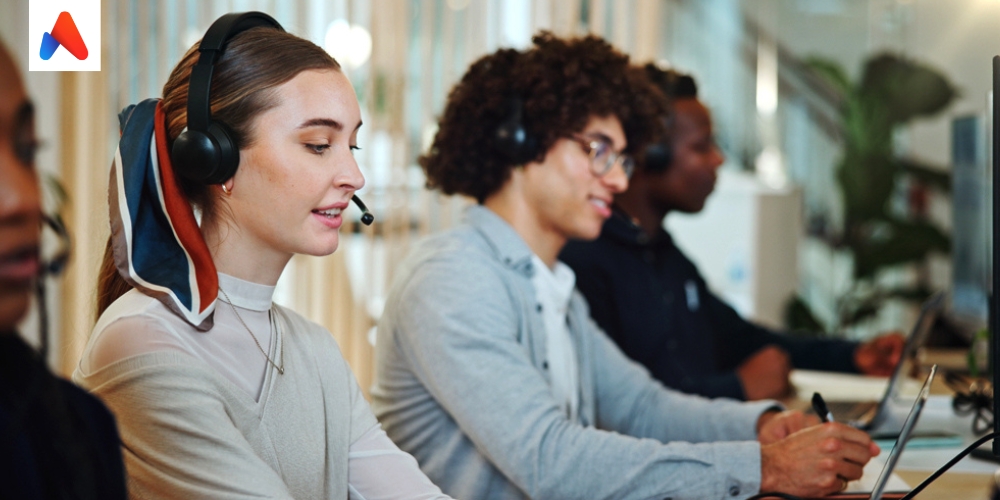
A multilingual healthcare call center in Morocco has become essential as healthcare organizations expand access across Europe, the Middle East, and parts of Africa. In 2026, effective healthcare CX in EMEA depends not just on language capability, but on cultural alignment—the ability to communicate with respect, context, and sensitivity across diverse populations.
Morocco has emerged as a nearshore destination where multilingual delivery is paired with cultural fluency. With strong Arabic and French capabilities and an operating environment suited to regulated healthcare interactions, Morocco supports EMEA healthcare CX that is both accurate and human.
Why a Multilingual Healthcare Call Center in Morocco Improves CX
Healthcare conversations carry emotional weight. Whether discussing benefits, coordinating care, or following up after a visit, patients and members respond to cues of familiarity and respect.
In multilingual EMEA environments, trust often begins with the opening line. When a patient hears “Bonjour” or “Marhaba”, it signals cultural awareness and sets expectations for a respectful interaction. That first moment matters—particularly in healthcare, where clarity and empathy influence adherence and outcomes.
A multilingual healthcare call center in Morocco is designed to deliver this alignment consistently, not incidentally.
“In healthcare CX, cultural fluency determines whether communication is received—or resisted.”
Beyond Translation: What Cultural Alignment Looks Like
Culturally aligned healthcare CX goes beyond literal translation. It reflects an understanding of how people prefer to be addressed, how information is framed, and how sensitivity is expressed.
In Morocco-based programs, cultural alignment supports:
- Appropriate tone in Arabic and French interactions
- Context-aware handling of sensitive health topics
- Clear explanation styles suited to local expectations
- Respectful escalation and closure practices
This alignment reduces friction and improves comprehension—particularly important in regions where healthcare systems and norms vary widely.
Multilingual Delivery Without Fragmentation
One of the challenges of multilingual healthcare CX is fragmentation—splitting languages across locations and losing consistency in quality and governance.
Morocco enables consolidated multilingual delivery within a single nearshore environment, supporting Arabic and French interactions under unified standards. This model offers:
- Centralized quality and compliance oversight
- Consistent training and coaching across languages
- Reduced operational handoffs
For healthcare organizations serving EMEA populations, this consolidation improves control while preserving language depth.
Healthcare CX Use Cases That Benefit Most
Morocco is particularly effective for healthcare CX programs that combine multilingual needs with cultural sensitivity.
Common use cases include:
- Patient and member services in Arabic and French
- Appointment coordination and reminders
- Benefits explanation and eligibility support
- Care navigation and provider coordination
These interactions benefit from live voice engagement delivered with cultural awareness—an area where Morocco performs strongly.
Business-Ready Multilingual Healthcare Operations
For healthcare leaders, cultural alignment must also translate into operational readiness. Morocco’s delivery environment supports centre de contact sanitaire multilingue operations—multilingual healthcare contact centers structured for regulated service delivery across EMEA markets.
This model balances:
- Language precision
- Cultural alignment
- Governance and reporting discipline
allowing healthcare organizations to scale multilingual CX without compromising standards.
Quality Oversight Across Languages and Cultures
Maintaining consistent quality across languages and cultural contexts requires continuous visibility. Periodic sampling is often insufficient in regulated healthcare environments.
Within the delivery ecosystem of Ameridial, multilingual programs in Morocco are supported by AI-enabled quality frameworks developed by its parent organization, Fusion CX.
AI-driven Quality Monitoring (AI QMS) supports:
- Continuous evaluation of interaction quality across languages
- Early identification of culturally sensitive deviations
- Targeted coaching that respects language nuance
This approach strengthens consistency while preserving the human tone essential to healthcare CX.
“Quality in multilingual healthcare CX must be continuous, not episodic.”
Cultural Alignment at Scale—Without Dilution
Scaling culturally aligned CX is challenging. As volumes grow, there is a risk of scripting, rigidity, and loss of empathy.
Morocco’s nearshore model mitigates this risk by emphasizing:
- Manageable team sizes
- Language-specific training
- Ongoing cultural coaching
This allows healthcare organizations to expand multilingual support while maintaining experience integrity.
How Morocco Complements Other Delivery Locations
Morocco’s culture-led CX role fits cleanly within a broader global delivery strategy:
- Morocco delivers culturally aligned Arabic and French CX for EMEA
- Albania supports EU-compliant Italian and European language programs
- Belize and Jamaica provide English nearshore voice support
- The Philippines offers global, multilingual scale
- India anchors non-CX operational depth
This orchestration preserves cultural alignment where it matters most.
The Ameridial Perspective
Within Ameridial’s global healthcare delivery network, Morocco serves as a culture-forward multilingual hub for EMEA healthcare CX.
Ameridial leverages Morocco for programs that require:
- Arabic and French language precision
- Cultural sensitivity across EMEA populations
- Strong quality and compliance governance
This focused deployment delivers multilingual healthcare CX with respect, clarity, and consistency.
In EMEA healthcare, multilingual support succeeds only when teams apply cultural alignment intentionally.
For organizations seeking a multilingual healthcare call center in Morocco, the country offers a nearshore environment that reinforces language capability through cultural fluency and operational discipline. In 2026, that alignment is no longer a differentiator—it is an expectation. Are you ready to meet the industry expectations in 2026? Our Experts will help you gain multilingual capability.