






The healthcare workforce shortage has reached a breaking point. Front-line teams are stretched, administrative queues are overflowing, and patient expectations are higher than ever. Your front desk is overwhelmed, and patients are frustrated by long hold times, unanswered questions, and slow appointment scheduling. This staffing strain isn’t just inconvenient — it threatens patient satisfaction, revenue flow, and employee morale.
But there is a practical, proven solution. Outsourcing specific non-clinical Patient Access tasks can help healthcare organizations regain control without adding more in-house employees.
The Disconnect Between Patient Care and Administrative Tasks
Clinical and administrative demands have become heavily intertwined, and it’s hurting both staff and patients.
Physicians, nurses, and practice staff shouldn’t be tied up with non-clinical duties like scheduling, insurance verification, and inbound call handling. Yet these responsibilities often fall back on them because the administrative team is short-staffed.
Here’s the daily reality for many healthcare leaders:
- Nurses are pulled off the floor to answer phones.
- Doctors are interrupted during charting for prescription refill requests.
- Front desk teams juggle walk-ins, phones, and insurance checks all at once.
This isn’t sustainable for organizations focused on quality care.
“Our team wasn’t burnt out from the clinical workload — they were burnt out from everything that pulled them away from it.”
Outsourced Patient Access teams shift these time-consuming tasks away from clinical staff so they can focus on what they were trained to do: care for patients.
Top 3 Benefits of Partnering With a Healthcare BPO
1. Improved Patient Access
When patient calls go unanswered, satisfaction scores drop — and so does trust.
A healthcare-focused outsourcing partner ensures:
- 24/7/365 live agent availability
- Zero busy signals during peak hours
- Consistent support for scheduling, registration, referrals, and benefit checks
- Fast response for prescription refill coordination
- Better communication for follow-up care and reminders
Patients get quicker answers. Staff regain operational breathing room. And executives see measurable improvements in patient experience metrics.
2. Financial Efficiency Without Compromising Quality
Hiring, training, and retaining administrative staff is expensive — especially in a competitive healthcare labor market.
Outsourcing Patient Access brings cost control by eliminating:
- Recruitment and onboarding expenses
- Overtime or temp staffing costs
- Turnover-related disruption
- Infrastructure investment for phone systems or call management technology
Ameridial delivers a fully managed, HIPAA-compliant call center operation at a lower, predictable cost — without sacrificing service quality.
Here’s a simple view:
| Admin Function | In-House Cost Impact | Outsourcing Value |
|---|---|---|
| Recruiting frontline staff | High (ads, interviews, onboarding) | Included |
| Training & QA | Continuous time + resources | Included |
| Technology & software | Licensing, hardware, maintenance | Included |
| Coverage gaps (PTO, sick days) | Creates delays & revenue leakage | No gaps — 24/7 |
This financial clarity is why many CFOs consider outsourcing an operational advantage, not an expense.
3. Scalability for Seasonal or Unexpected Surges
Call volume in healthcare isn’t predictable. It spikes during:
- Flu season
- Back-to-school immunization periods
- Open enrollment
- Provider shortages
- Weather emergencies
- Public health events
In-house teams simply can’t expand or shrink quickly enough.
Outsourced Patient Access teams scale instantly — whether you need 5 agents today or 50 agents tomorrow.
“We couldn’t afford to overstaff for spikes, but we also couldn’t afford to miss patient calls. Outsourcing solved both.”
Why “US-Based” Matters for Patient Trust
Healthcare communication is sensitive. Accuracy, empathy, and cultural awareness matter.
That’s why Ameridial’s 100% US-based agents provide a level of connection that patients notice immediately:
- Clear accents help prevent miscommunication.
- Agents understand common cultural nuances around healthcare conversations.
- Patients feel more comfortable sharing personal information.
- There’s stronger alignment with provider expectations and regulatory workflows.
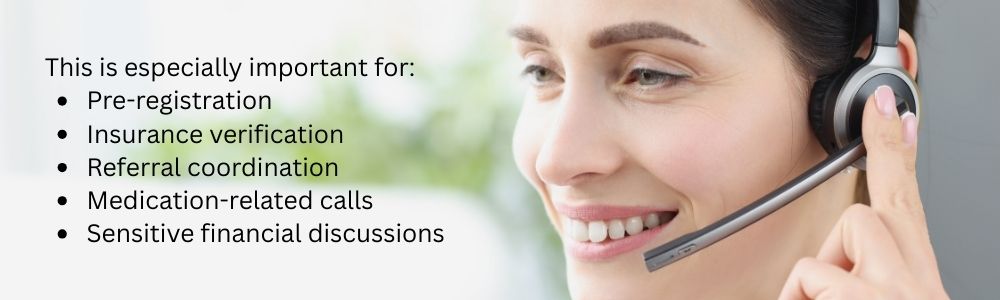
And with rigorous training, Ameridial maintains full HIPAA compliance, strict data security protocols, and robust QA monitoring to ensure patient information stays protected at all times.
Outsourcing Is Not About Replacing Staff — It’s About Supporting Them
Healthcare leaders often worry that outsourcing will feel impersonal or replace their trusted staff, but the reality is very different. Outsourced Patient Access Services are designed to support your internal team, not replace them. By shifting time-consuming administrative responsibilities such as appointment scheduling, insurance verification, and patient call handling to a trusted partner, your staff can focus on clinical care and the in-person patient experience. This approach strengthens your workforce, reduces burnout, and ensures consistent coverage without adding more in-house resources.
Your clinical teams stay focused on patient care while your front-desk staff maintain smoother on-site operations. Meanwhile, a HIPAA-compliant, US-based Medical Call Center Outsourcing partner like Ameridial manages the communication flow that keeps everything connected. In this way, outsourcing isn’t about removing people — it’s about giving your team the support they need to perform at their best and protecting revenue through reliable Outsource Patient Access solutions.
Ready to Stabilize Your Workforce and Improve Patient Access?
Staffing shortages aren’t going away soon — but the strain on your team doesn’t have to continue.
Ameridial’s US-based, HIPAA-compliant Patient Access solutions help healthcare organizations improve patient access, reduce burnout, and protect revenue without adding staffing pressure.
Schedule a consultation today to discuss how Ameridial can support your patient access needs.